Scientific Experiments
8th Grade — Term 1
22 documented experiments from all four units with procedures, observations, and conclusions
Unit 1: 6 experiments
Unit 2: 8 experiments
Unit 3: 4 experiments
Unit 4: 1 experiment
Guide Contents
Unit 1: Matter and Energy
6 experiments
1
Compressibility of Matter
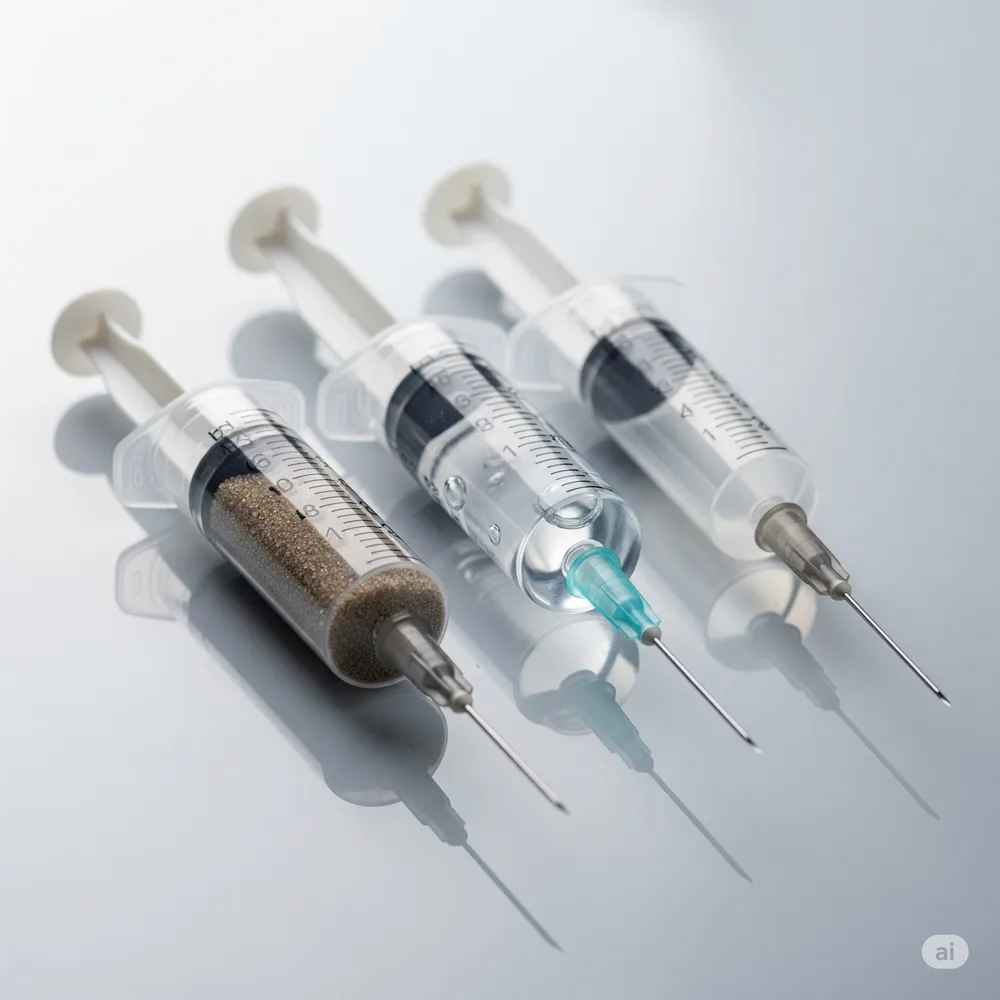
Materials:
- Three identical syringes, three stoppers, fine sand, water.
Procedure:
- Seal each syringe opening with a stopper.
- Place equal volumes of air, water, and sand in the syringes.
- Gradually press the plunger of each syringe.
Observation & Conclusion: The volume of air decreases
(compressible), while the volume of water and sand does not change
(incompressible).
2
Molecular Motion (Diffusion of Potassium Permanganate)
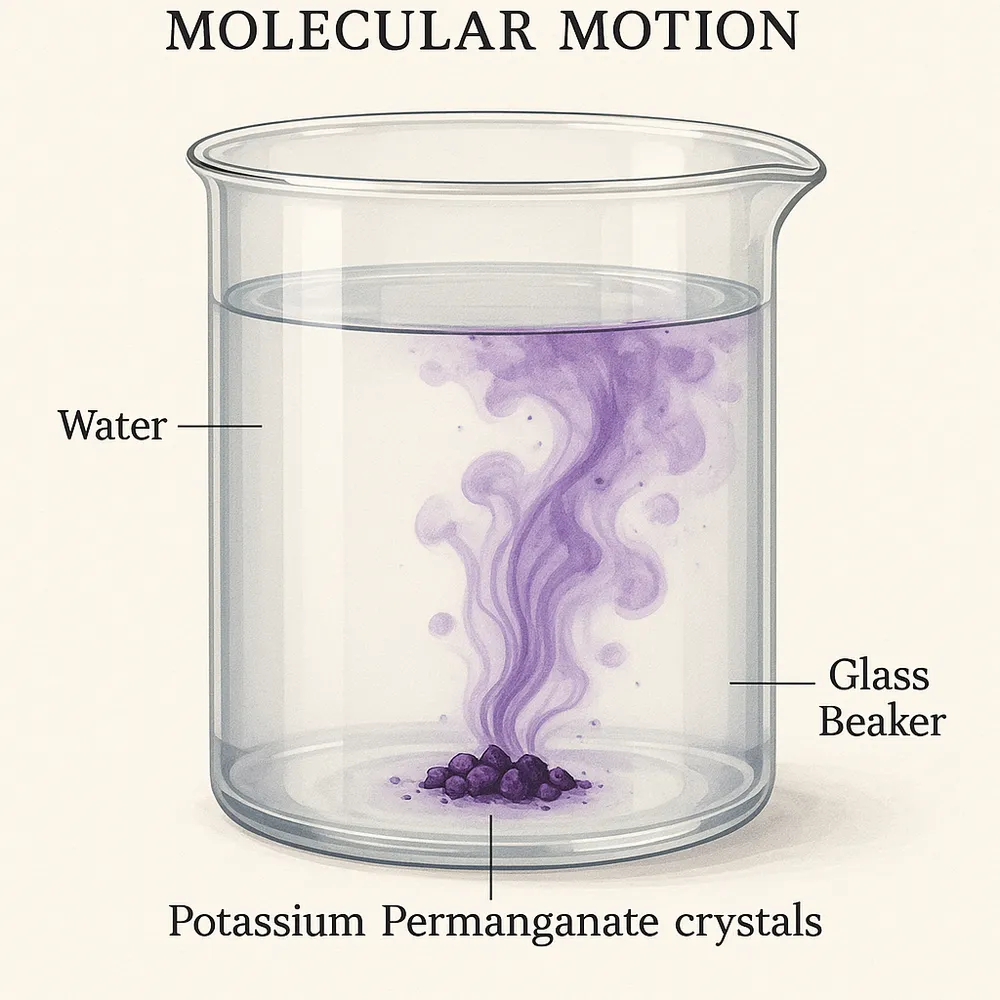
Materials:
- Water, potassium permanganate, glass flask.
Procedure:
- Pour some water into the flask.
- Slowly add potassium permanganate crystals to the water.
Observation & Conclusion: The purple color of potassium
permanganate gradually spreads through the water until it is fully colored,
indicating that water molecules are in continuous random motion.
3
Change of Matter from One State to Another
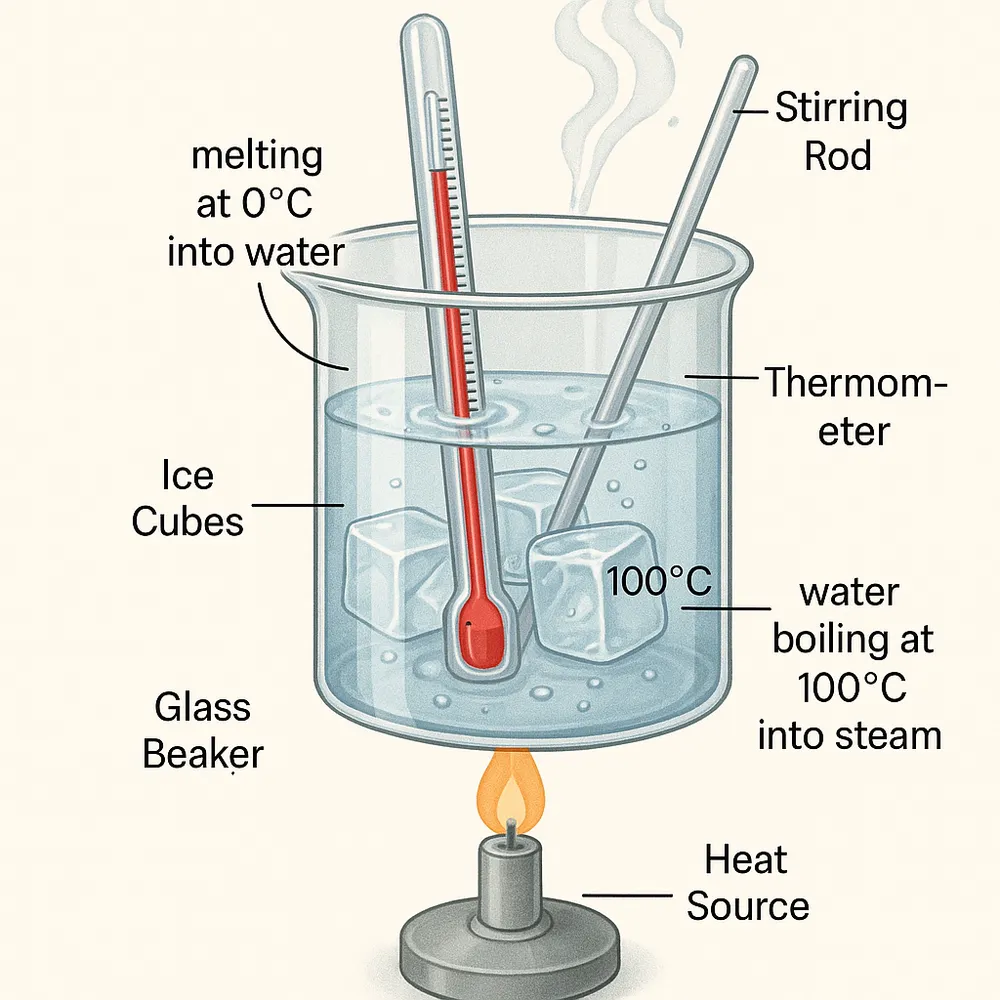
Materials:
- Glass beaker, ice cubes, heat source, Celsius thermometer, stirring rod.
Procedure:
- Place ice cubes and the thermometer in the beaker, then heat gently.
- Stir at equal time intervals and record the thermometer reading until the ice melts.
- Continue heating until the water reaches boiling point.
Observation & Conclusion: Ice begins to melt at 0°C and turns
into water, then water boils at 100°C and turns into steam.
4
Effect of Mass on the Rate of Temperature Change
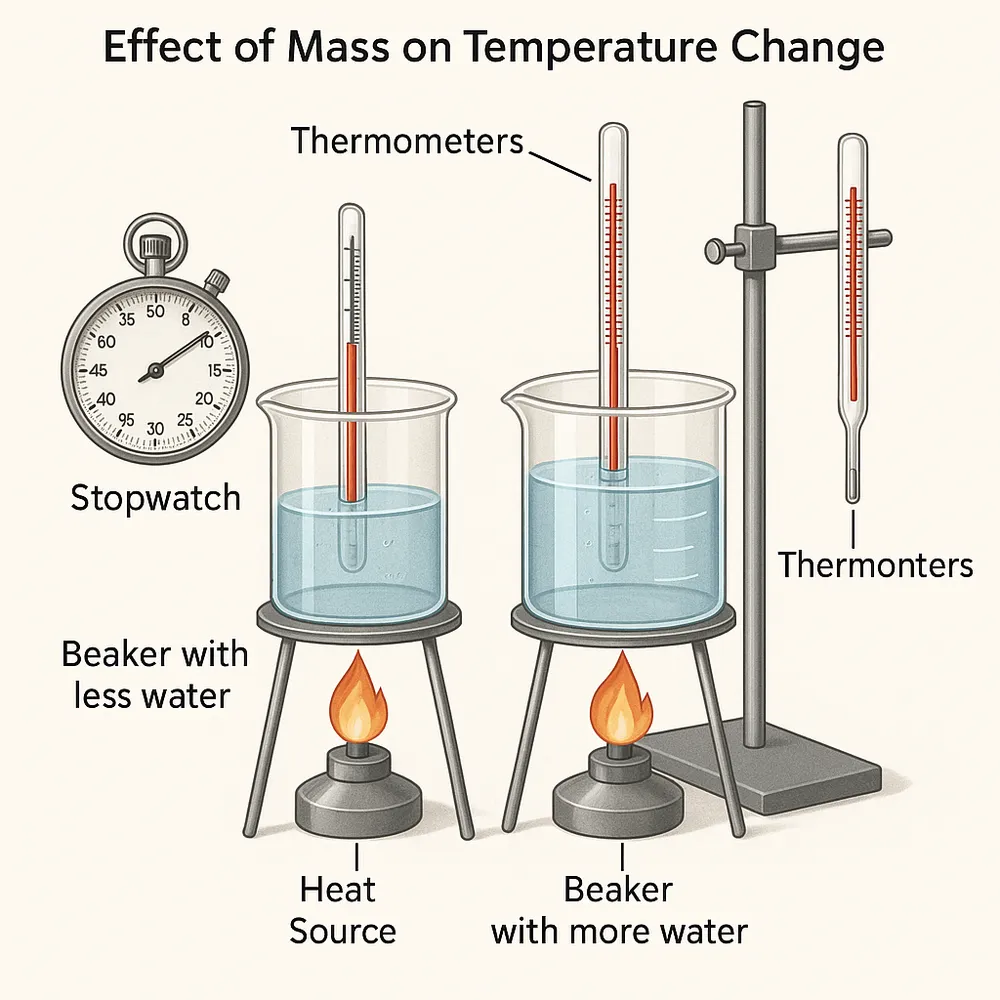
Materials:
- Two glass beakers, water, two thermometers, heat source, stand, stopwatch.
Procedure:
- Place different amounts of water in the two beakers.
- Heat both beakers for the same period of time.
- Compare the temperature change between the two beakers.
Observation & Conclusion: The temperature change increases as the
mass of water decreases.
5
Effect of Material Type on the Rate of Temperature Change
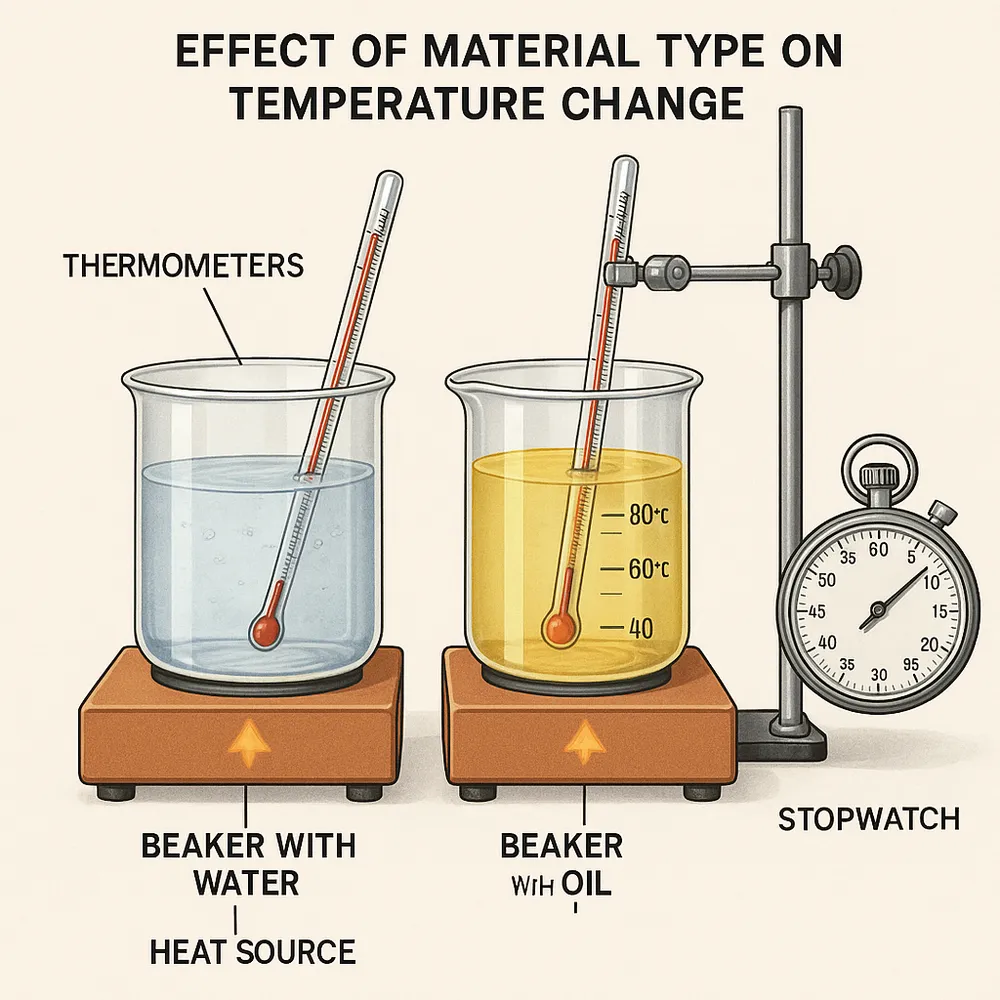
Materials:
- Two glass beakers, water, oil, two thermometers, heat source, stand, stopwatch.
Procedure:
- Place equal amounts of water and oil in the two beakers.
- Heat both beakers for the same period of time.
- Compare the temperature change between water and oil.
Observation & Conclusion: The temperature change of oil is greater
than that of water.
6
Effect of State of Matter on the Rate of Temperature Change
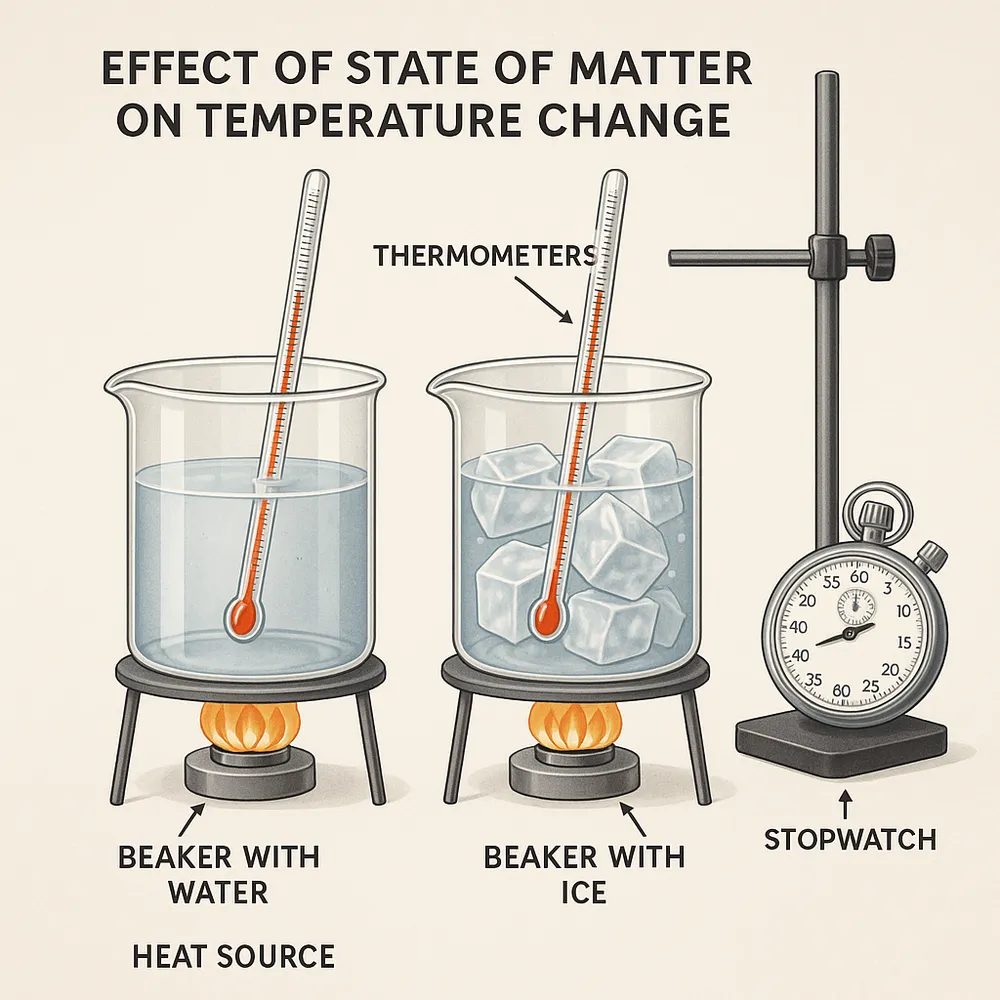
Materials:
- Two glass beakers, water, ice, two thermometers, heat source, stand, stopwatch.
Procedure:
- Place equal amounts of water and ice in the two beakers.
- Heat both beakers for the same period of time.
- Compare the temperature change between water and ice.
Observation & Conclusion: The temperature change of ice is greater
than that of water.
Unit 2: Matter and Chemical Reactions
8 experiments
1
Chemical Reaction (Vinegar and Baking Soda)
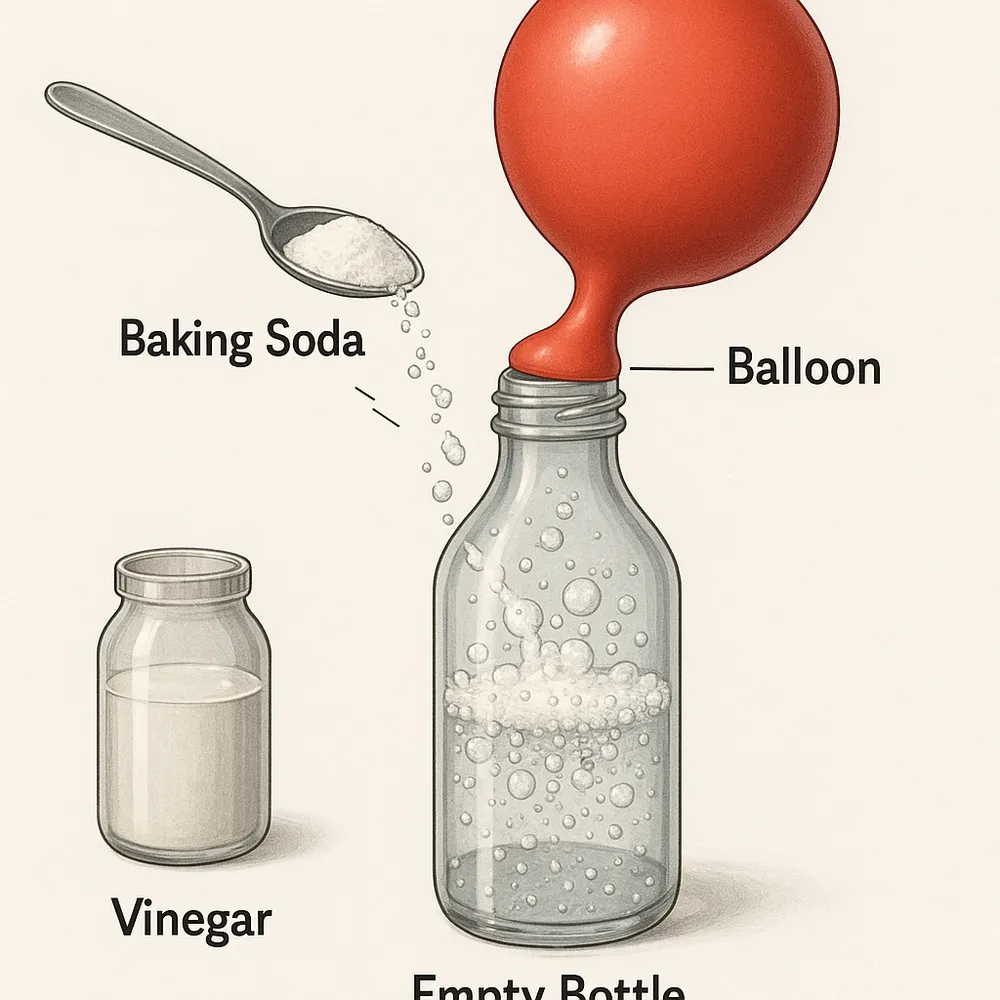
Materials:
- Baking soda, vinegar, balloon, empty bottle.
Procedure:
- Put baking soda in the balloon and vinegar in the bottle.
- Attach the balloon to the bottle opening.
- Lift the balloon and let the baking soda fall into the vinegar.
Observation & Conclusion: Effervescence occurs and carbon dioxide
gas is released, inflating the balloon, indicating a chemical change.
2
Formation of a Precipitate (Silver Nitrate and Sodium Chloride)
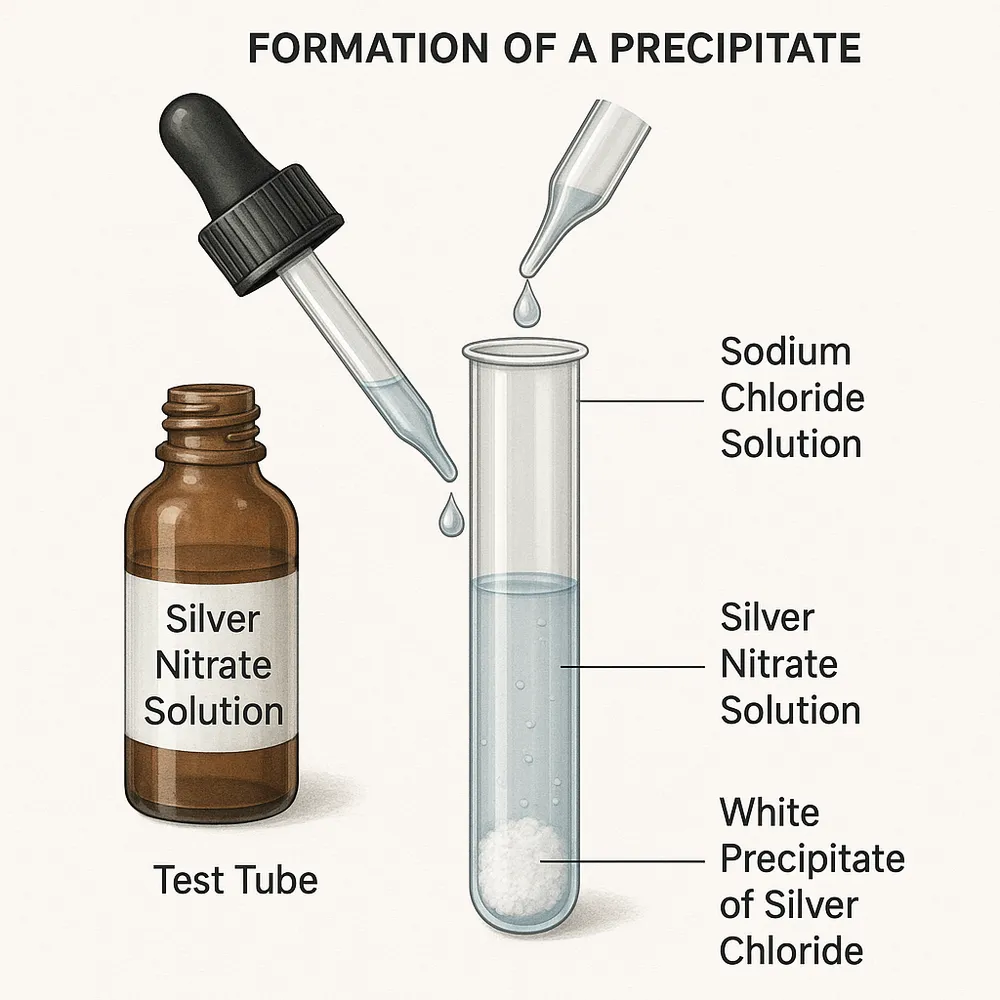
Materials:
- Sodium chloride solution, silver nitrate solution, test tube.
Procedure:
- Place sodium chloride solution in the test tube.
- Add drops of silver nitrate solution to it.
Observation & Conclusion: A white precipitate of silver chloride
forms, indicating a chemical reaction has occurred.
3
Color Change (Zinc and Copper Sulfate)
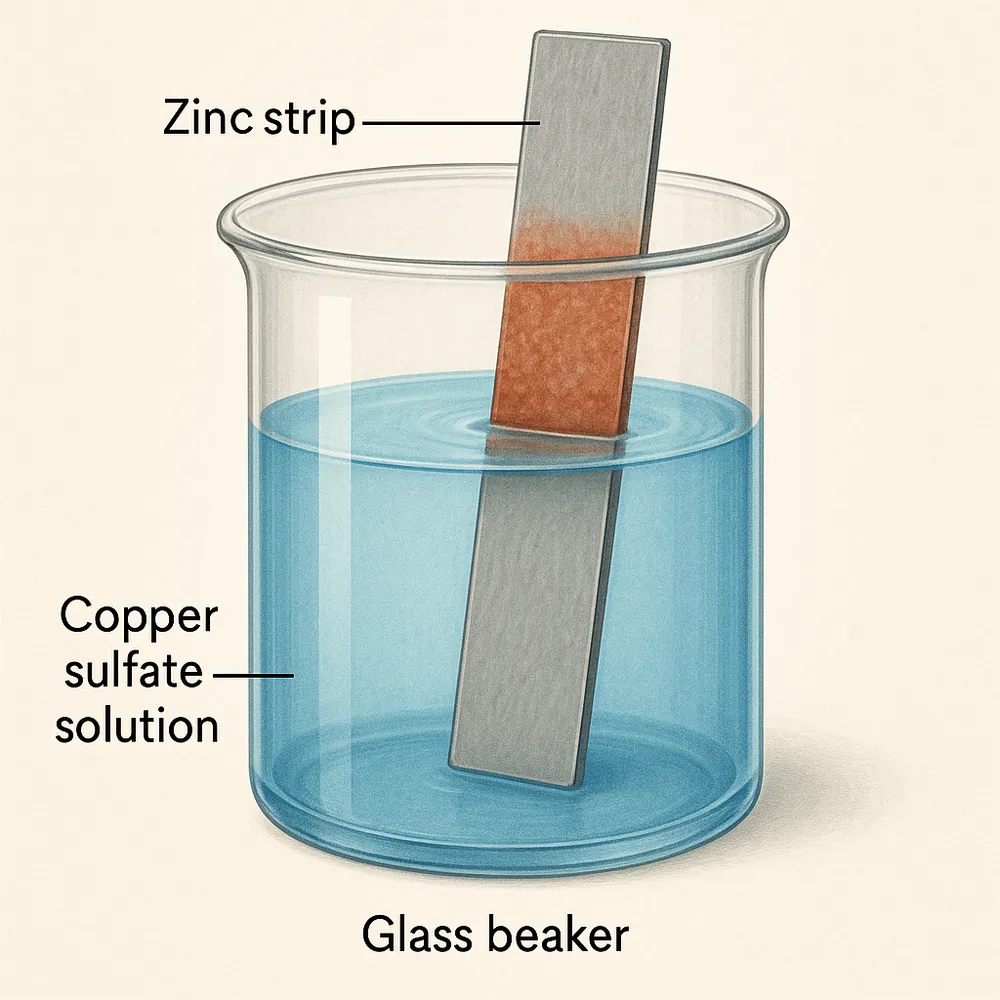
Materials:
- Glass beaker, zinc plate, copper sulfate solution.
Procedure:
- Pour copper sulfate solution into the beaker.
- Place the zinc plate in the solution.
Observation & Conclusion: The blue color of the copper sulfate
solution disappears and a reddish-brown color appears on the zinc plate.
4
Gas Evolution (Magnesium Ribbon and Hydrochloric Acid)
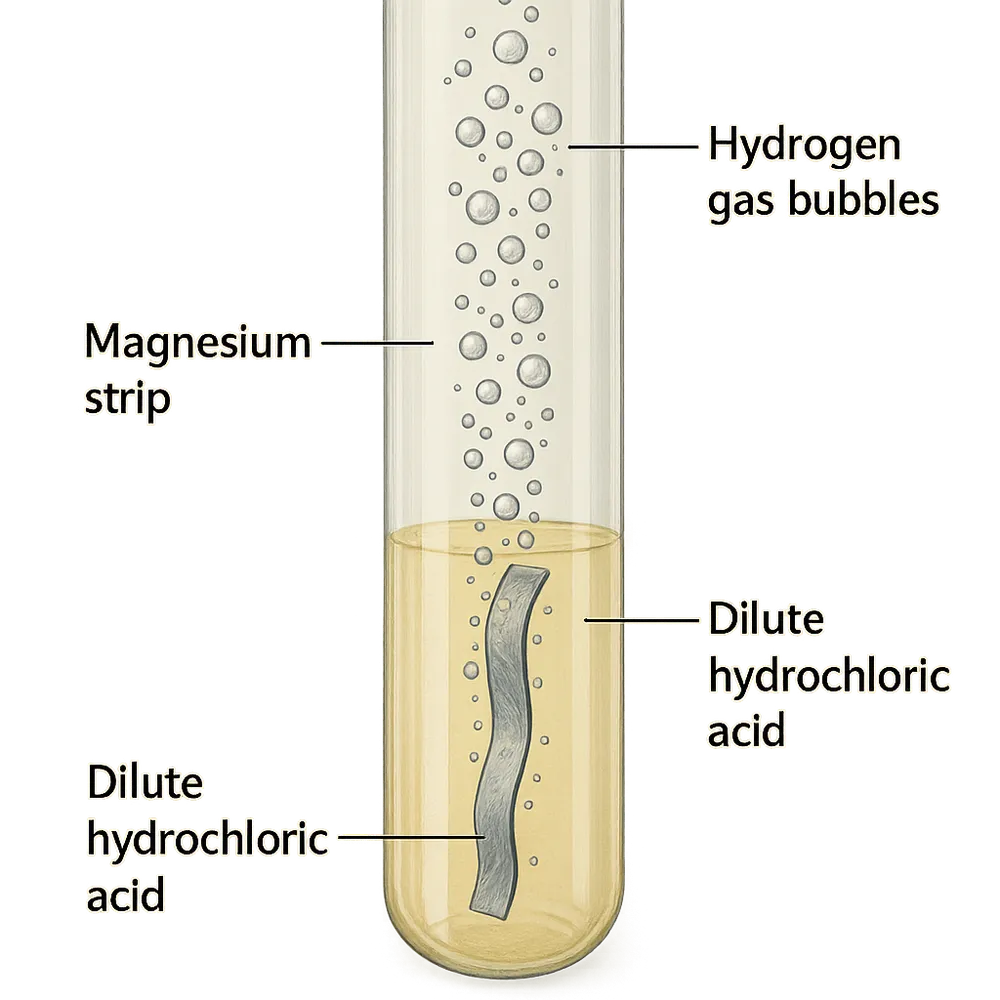
Materials:
- Magnesium ribbon, dilute hydrochloric acid, test tube.
Procedure:
- Place the magnesium ribbon in the test tube.
- Add dilute hydrochloric acid to it.
Observation & Conclusion: A reaction occurs and gas bubbles of
hydrogen are released.
5
Emission of Light and Heat (Burning Magnesium Ribbon)
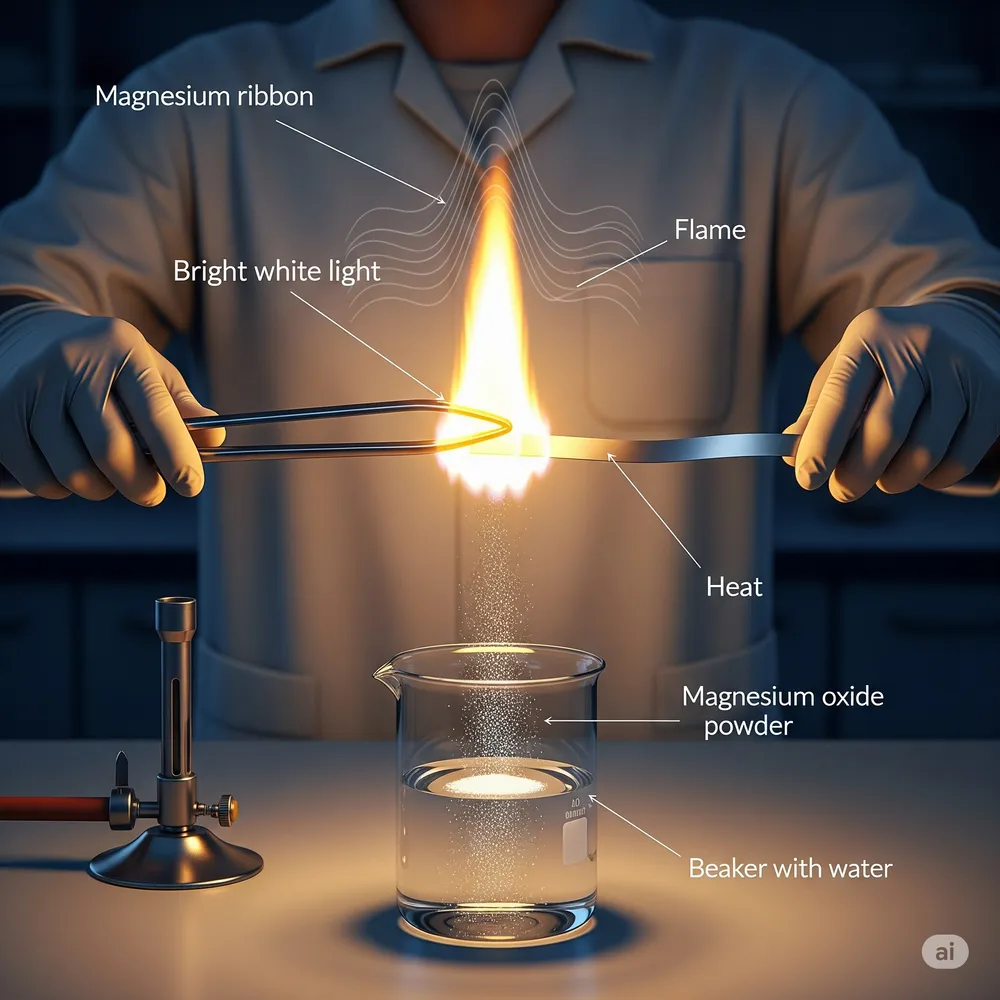
Materials:
- Magnesium ribbon, water, tongs, flame.
Procedure:
- Hold the end of the magnesium ribbon with tongs.
- Ignite the end of the ribbon using the flame.
- Place the resulting powder in water.
Observation & Conclusion: A bright glow and light are emitted with
heat release, and the ribbon turns into a white powder of magnesium oxide.
6
Burning Sugar
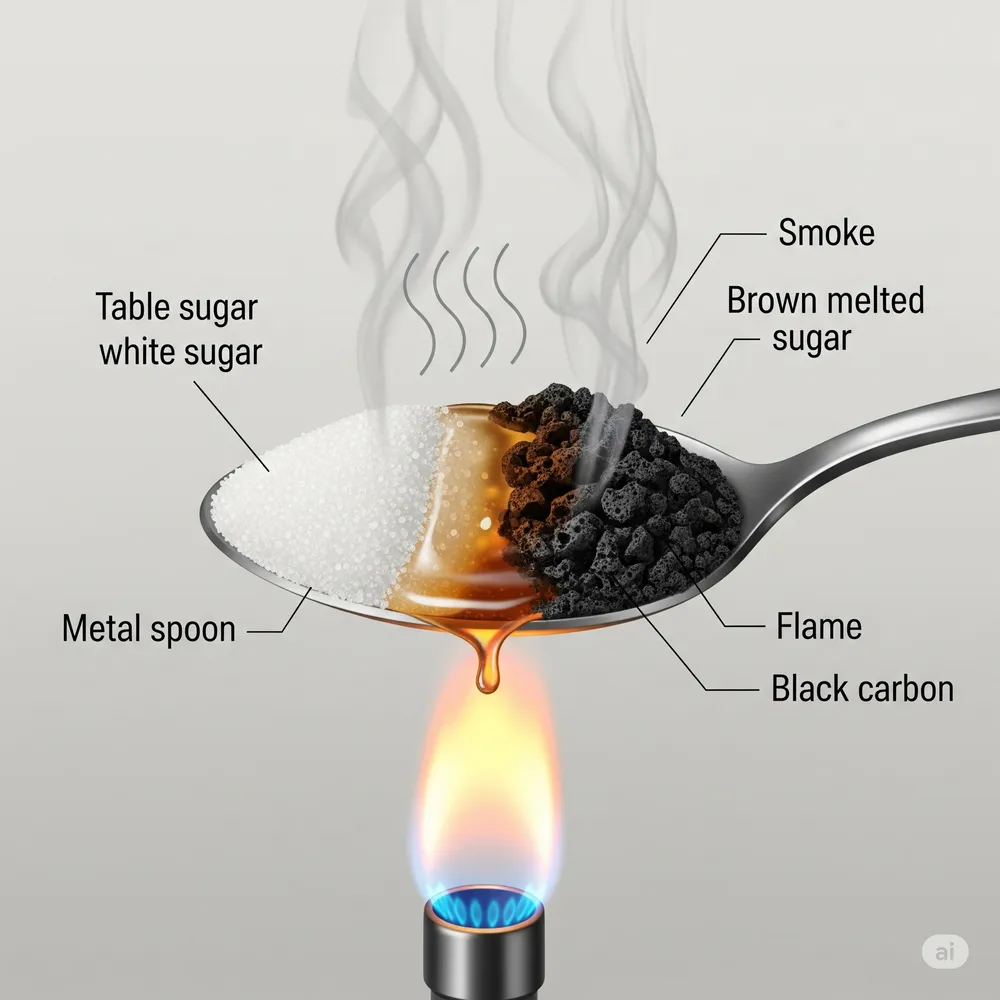
Materials:
- Table sugar, spoon, flame.
Procedure:
- Place some table sugar in a spoon.
- Heat the sugar slowly by holding the spoon over the flame.
Observation & Conclusion: The sugar turns into a brown melt and
begins to burn, with a caramel odor and the formation of carbon.
7
Reaction of Oil with Caustic Soda (Making Soap)
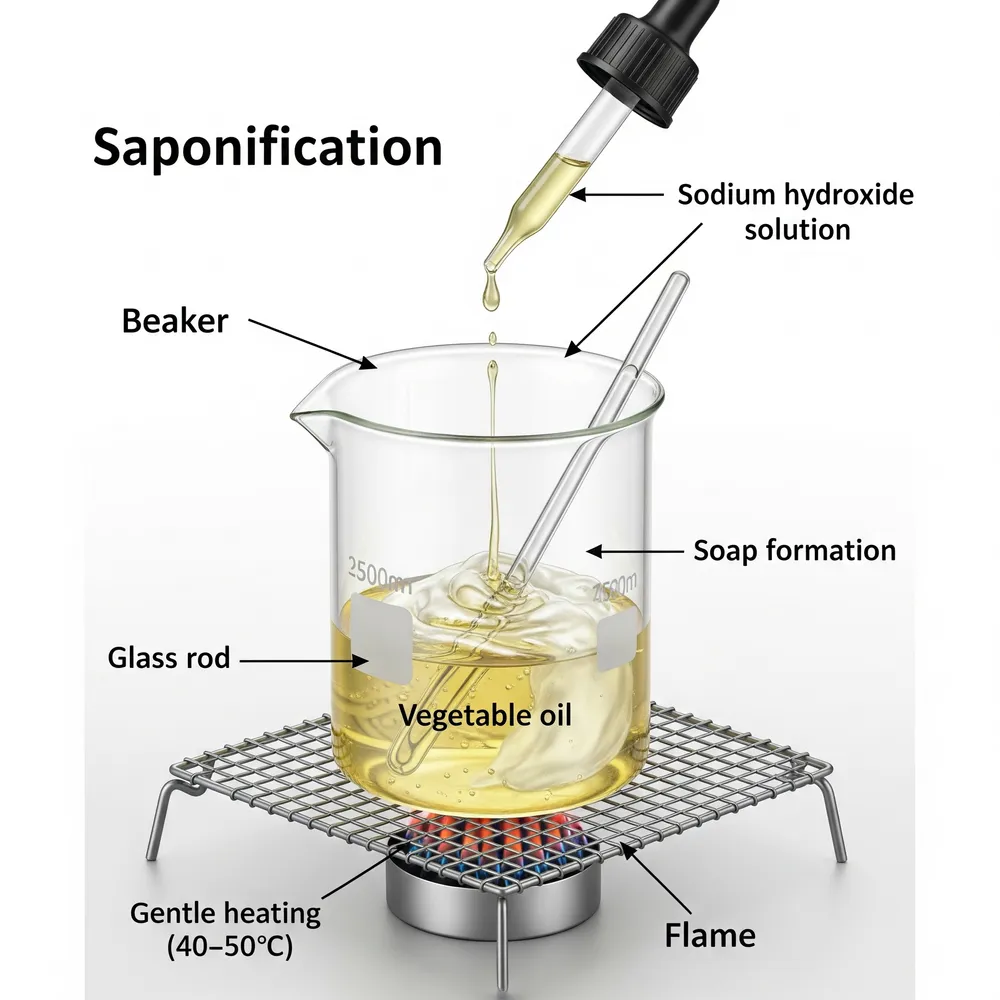
Materials:
- Oil, glass beaker, caustic soda solution, flame, stirring rod.
Procedure:
- Put 100 ml of vegetable oil in a beaker.
- Add 30 ml of caustic soda solution drop by drop.
- Heat the mixture to 40–50°C while stirring.
Observation & Conclusion: The consistency of the mixture changes
and soap is formed.
8
Law of Conservation of Mass
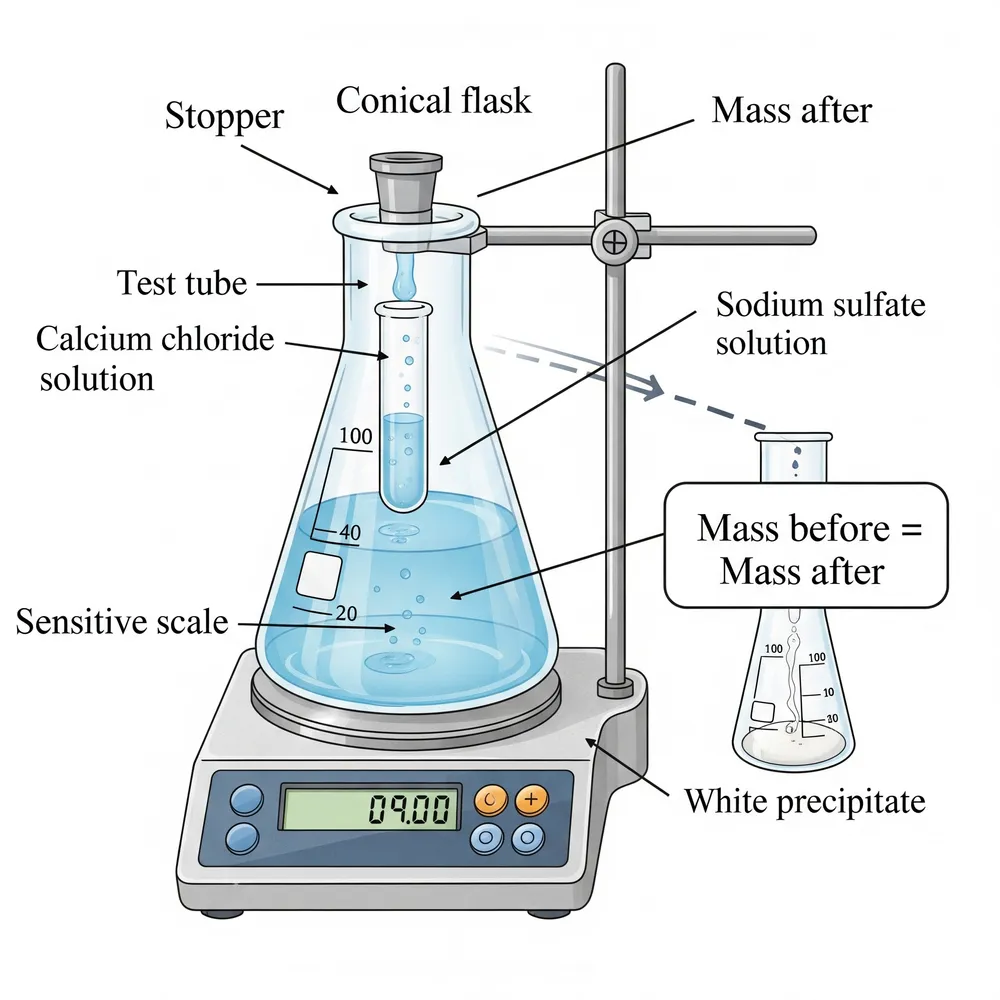
Materials:
- Calcium chloride solution, sodium sulfate solution, test tube, flask, sensitive balance, stopper.
Procedure:
- Place the solutions in the test tube inside the flask.
- Determine the mass before and after the reaction.
Observation & Conclusion: The mass before the reaction equals the
mass after the reaction, proving the law of conservation of mass.
Unit 3: Energy Flow in Photosynthesis and Cellular Respiration
4 experiments
1
Van Helmont's Experiment
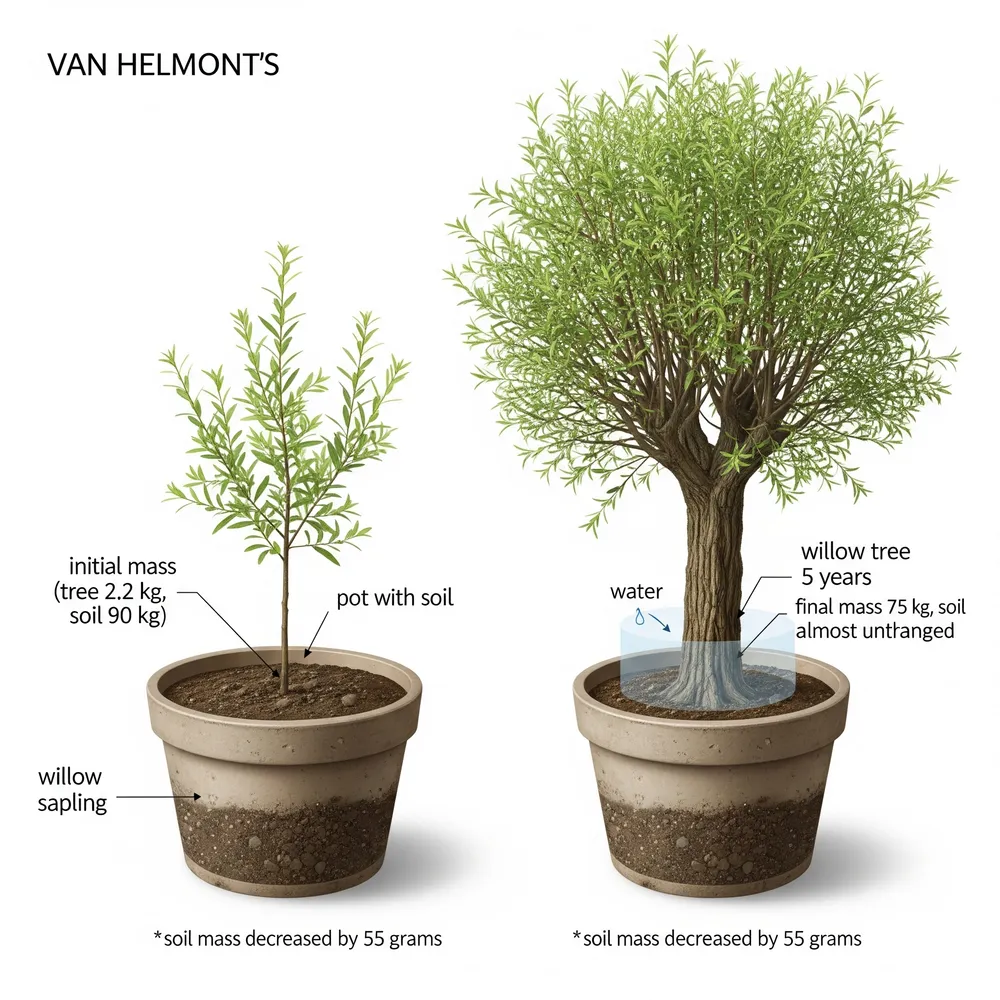
Procedure:
- Plant a willow sapling weighing 2.2 kg in 90 kg of dry soil.
- Water the tree only for 5 years.
- Weigh the tree and soil after 5 years.
Observation & Conclusion: The tree's mass became 75 kg, while the
soil mass decreased by only 55 grams, proving that water is the main factor in the
tree's growth.
2
Light Absorption by Chlorophyll
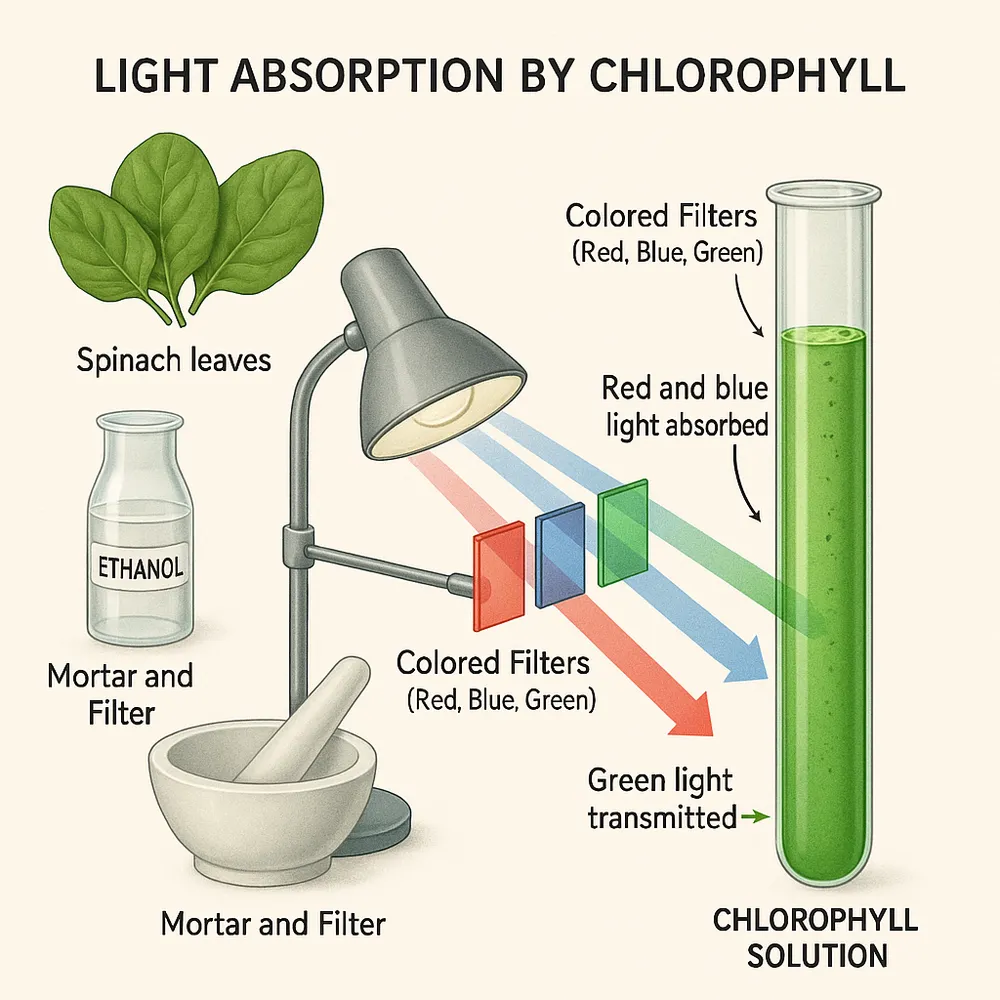
Materials:
- Spinach leaves, ethyl alcohol, test tube, lamp, colored films (red, blue, green).
Procedure:
- Extract the chlorophyll solution from spinach.
- Pass red, then blue, then green light through the solution.
Observation & Conclusion: Chlorophyll absorbs red and blue light
and allows green light to pass through.
3
Importance of Light and Chlorophyll for Starch Formation
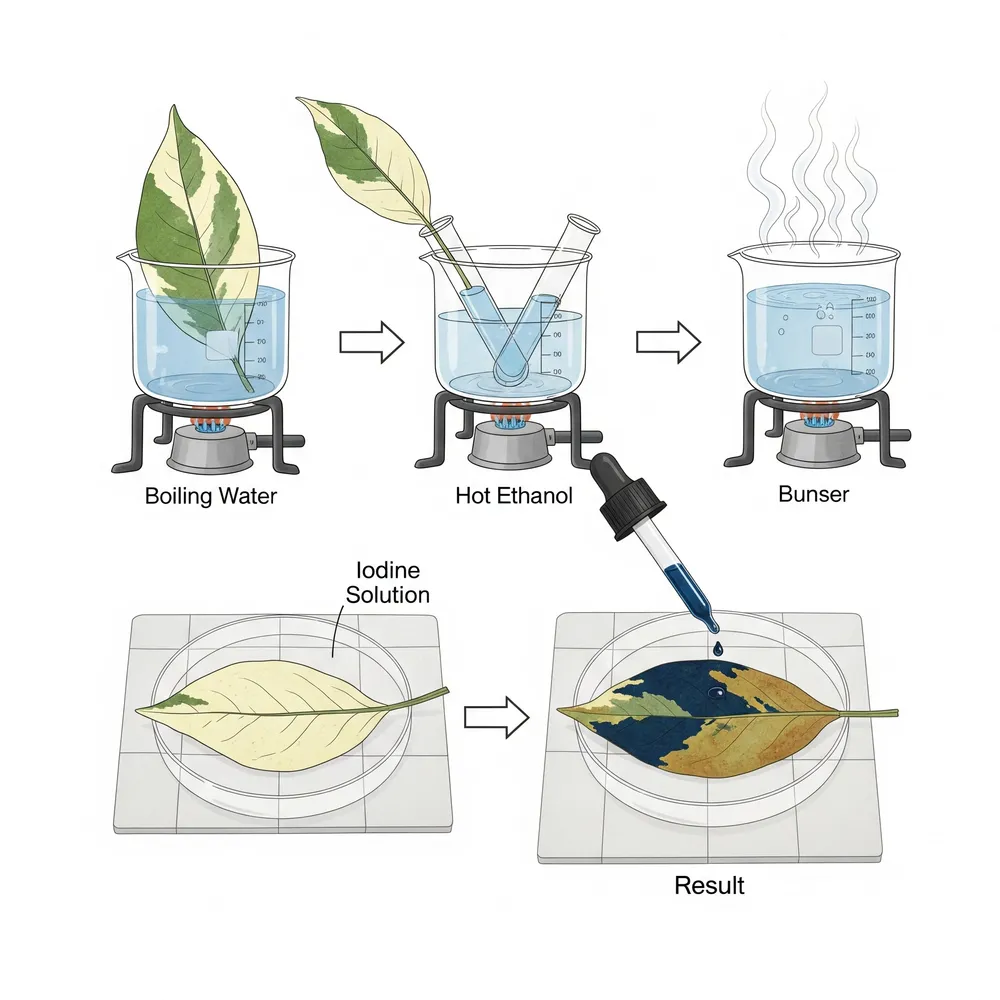
Materials:
- Variegated plant leaf, water, iodine solution, ethyl alcohol, heat source.
Procedure:
- Place the leaf in boiling water for two minutes.
- Transfer the leaf to hot ethyl alcohol to remove chlorophyll.
- Add drops of iodine solution to the leaf.
Observation & Conclusion: The green areas of the leaf turn dark
blue, indicating that starch formed only in the green parts.
4
Gas Exchange in Plants
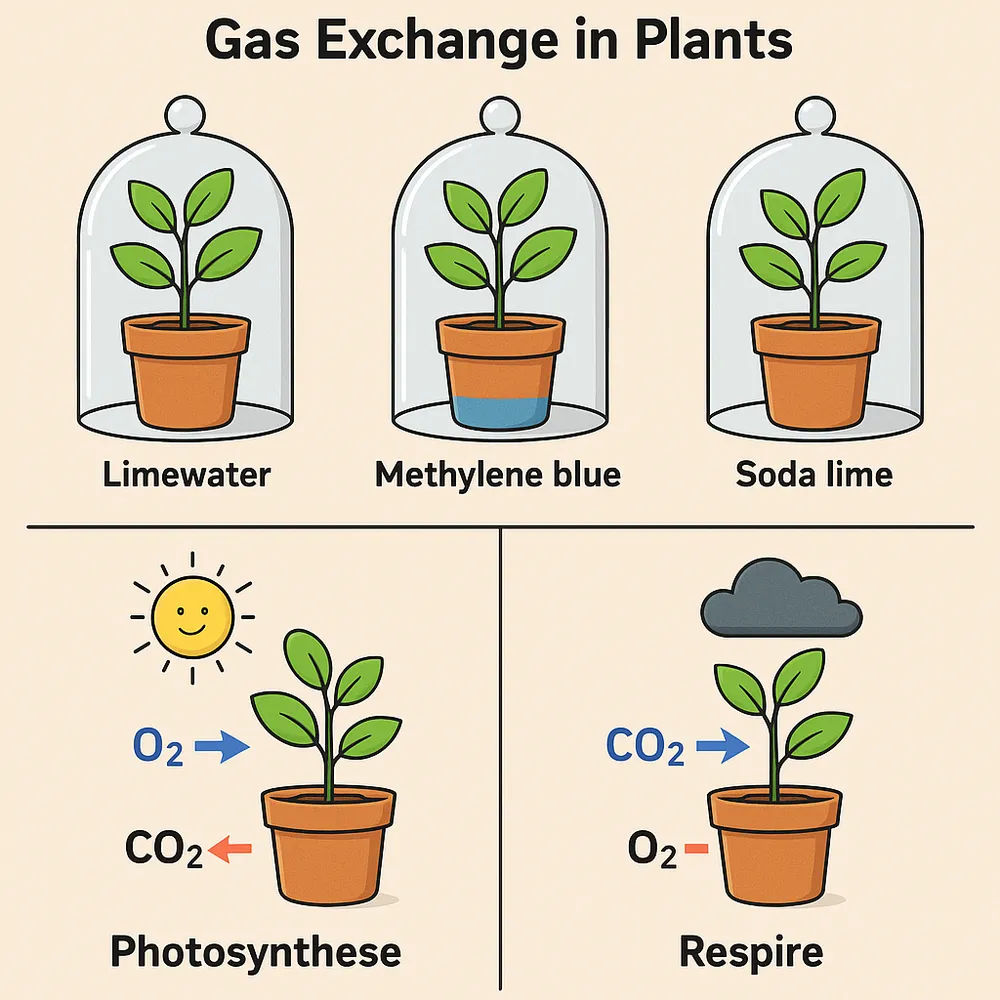
Materials:
- 3 potted plants, 3 glass bells, limewater solution, methylene blue solution, petri dish with soda lime.
Procedure:
- Place the solutions next to the plants and cover them with the bells.
- Repeat the experiment in the presence and absence of light.
Observation & Conclusion: Gas exchange occurs in both respiration
and photosynthesis, where the plant absorbs oxygen and produces carbon dioxide at
night, and the opposite during the day.
Unit 4: Geological Processes
1 experiment
1
Formation of Minerals by Crystallization
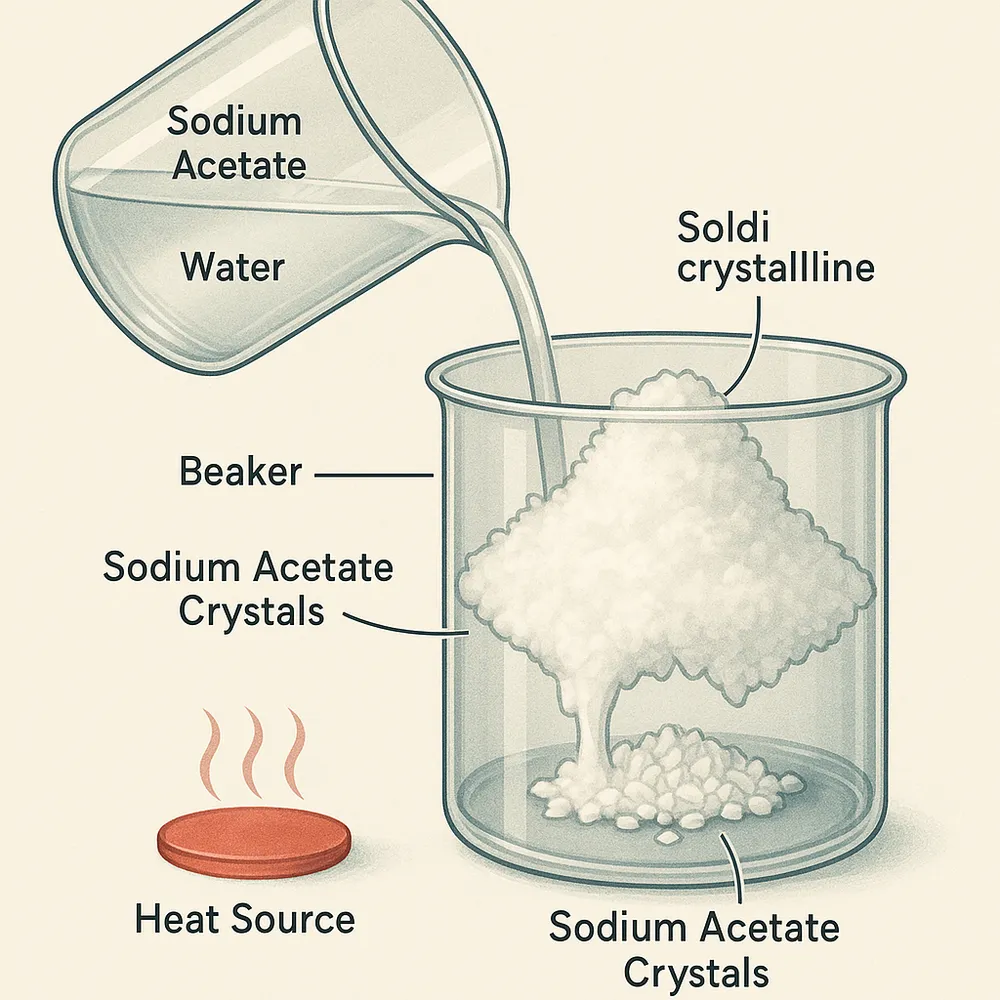
Materials:
- Sodium acetate salt, water, beaker, heat source.
Procedure:
- Dissolve sodium acetate salt in water to form a saturated solution.
- Heat the solution and add more salt to form a supersaturated solution.
- Pour the hot solution onto a quantity of cold salt.
Observation & Conclusion: White crystals resembling snow form,
demonstrating the process of crystallization.